M i n i m a l i a
Alessandro Fumera © Copyright 2021 - All rights reserved
- LEGAL WARNINGS -
Photographs and contents of this website are protected by copyright. Their use without formal authorization, even for non-commercial purposes, is a violation of the current regulations and is punishable accordingly. Any action aimed at violating this copyright is not only illegal, but also useless: the photographs published here are chosen and reproduced in such a way as to always allow the author to prove their authorship.
- LEGAL NOTICES -
Photographs and contents of this website are protected by copyright. Their use without formal authorization, even for non-commercial purposes, is a violation of regulations in force and can be punished pursuant to them. Any action aimed at infringing this copyright is not only illegal, but also useless: the photographs published here have been selected and reproduced in such a way as to allow the author to always prove his authorship.
homepage
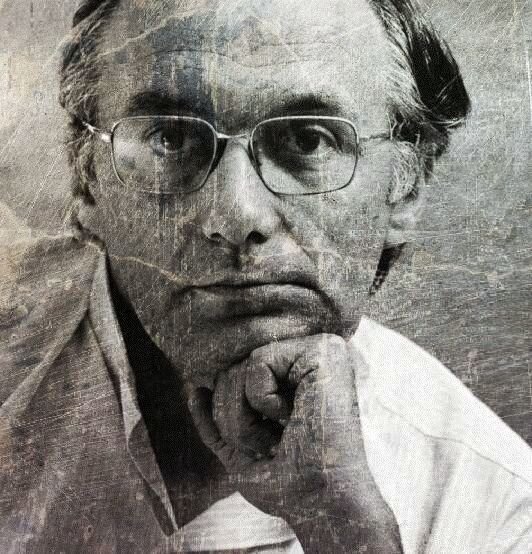
Luigi Ghirri
(1943 - ∞)
I searched in the act of looking for the first step to try to understand.
* * *
Places, the outside, the inside, everything seems to be crossed by visual stimulations that are increasingly fast and frequent, but this prevents us from seeing clearly.
The ever more dizzying multiplication, the ever faster visual stimulation seem to cover the whole world in a totalizing way, making our exterior of an indestructible and apparently incomprehensible density and opacity.
But precisely in this heterogeneous, monstrous, and boundless "territory of the analogous," photography can find its validity and necessity.
* * *
Photography, therefore, as a not marginal moment of pause and reflection, a necessary moment of reactivation of the circuits of attention disrupted by the speed of the outside, an image in balance or pacification, between the known representations and those that will be.
Photography as a method to look at and depict places, objects, faces of our time, not to catalog or define them, but to discover and construct images that are also new possibilities of perception.
Perhaps in the end the places, objects, things encountered by chance are simply waiting for someone to look at them, recognize them, and not despise them by relegating them to the shelves of the boundless supermarket of the outside.
Perhaps these places belong more to our existence than to modernity and not only to deserts or desolate lands. Perhaps they are waiting for new words or new figures, because those we know have been worn out for too long.
It is also necessary to enter into a relationship of affection so that places, spaces, and architectures can become recognizable, familiar, habitable, or perhaps simply reveal themselves again to our gaze.
* * *
Photography as a great adventure of thought and gaze, a great magical toy that miraculously manages to combine our adult awareness with the fairy-tale world of childhood.
Photography as a language to see and not to transform, conceal, or modify reality.
No violence, nor visual-emotional shock, or forcing, but silence, lightness, rigor, in order to be able to enter into a relationship with things, objects, places.
Confident that a gaze free from formal acrobatics, forms of coercion, or overthinking, can find a balance between awareness and simplicity.
I tried to find in the act of looking the first step toward understanding.
* * *
The places, the outside world, the inside, everything seems to be crossed by faster and faster, more and more frequent visual stimulations, but this prevents us from seeing clearly.
The more and more dizzying increase, the faster and faster visual stimulation seem to cover the whole world in an all-absorbing way; this makes the outside world look irreparably tick and obscure, apparently impenetrable.
But precisely in this heterogeneous, hideous and endless "territory of the analog", photography can find its value and necessity.
* * *
So, photography as a non-marginal moment of pause and reflection, a necessary moment of reactivation of the attention processes broken up by the speed of the outside world, a balanced image, or an image of pacification, between known representations and the ones to come.
Photography as a method to look at and depict places, objects, faces of our time, not to catalog or define them, but to discover and build images that are also new possibilities of perception.
Perhaps, in the end, places, objects, things encountered by chance simply wait for someone to look at them, recognize them and not hold them in contempt, relegating them to the shelves of the endless supermarket outside.
Perhaps these places belong more to our existence than to modernity and not just to deserts or wastelands. Perhaps they are waiting for new words or new figures, because the ones we know have been worn out for too long.
One must also establish an affective relationship so that places, spaces and architectures can become known, familiar, liveable, or perhaps they can simply reveal themselves anew to our look.
* * *
Photography as a great adventure of thought and of look, a great magic toy that manages to miraculously combine our adult awareness with the fairy-tale world of childhood.
Photography as a language to see and not to transform, hide, modify reality.
No violence, no visual-emotional shock, no twist, but silence, lightness, rigor, to be able to establish a relationship with things, objects, places.
Confident that a look free from formal tumbles, forms of coercion and lucubrations, will be able to find a balance between awareness and simplicity.
Minimalia starts here.
Minimalia starts here.